
We live within a coupled human-Earth system. Wildfire, flooding, water scarcity, and ecosystem decline are not isolated problems—they are signals of a system under stress. By combining field observations, data, and systems analysis, Precision Ecohydrology uncovers the natural and human processes driving change, identifies where intervention can have the greatest influence, and develops practical pathways that repair the relationship between human and Earth systems.
Stress Signals
THE SAME UNDERLYING LOSS OF SYSTEM FUNCTION CAN MANIFEST IN DIFFERENT WAYS. WE IDENTIFY THE CAUSAL CHAINS OF REPAIR.
Wildfire
+
Flood
+
Water Scarcity
+
Atmospheric & Weather Extremes
+
Agricultural Stress
+
Invasive Species
+
Land Degradation
+
Urban Climates
+
Coastal Systems
+
Arctic Systems
+
REMOTE SENSING
SYSTEMS ENGINEERING
COMPUTATIONAL SCIENCE
EARTH SYSTEMS SCIENCE
PHYSICS-FIRST ANALYSIS
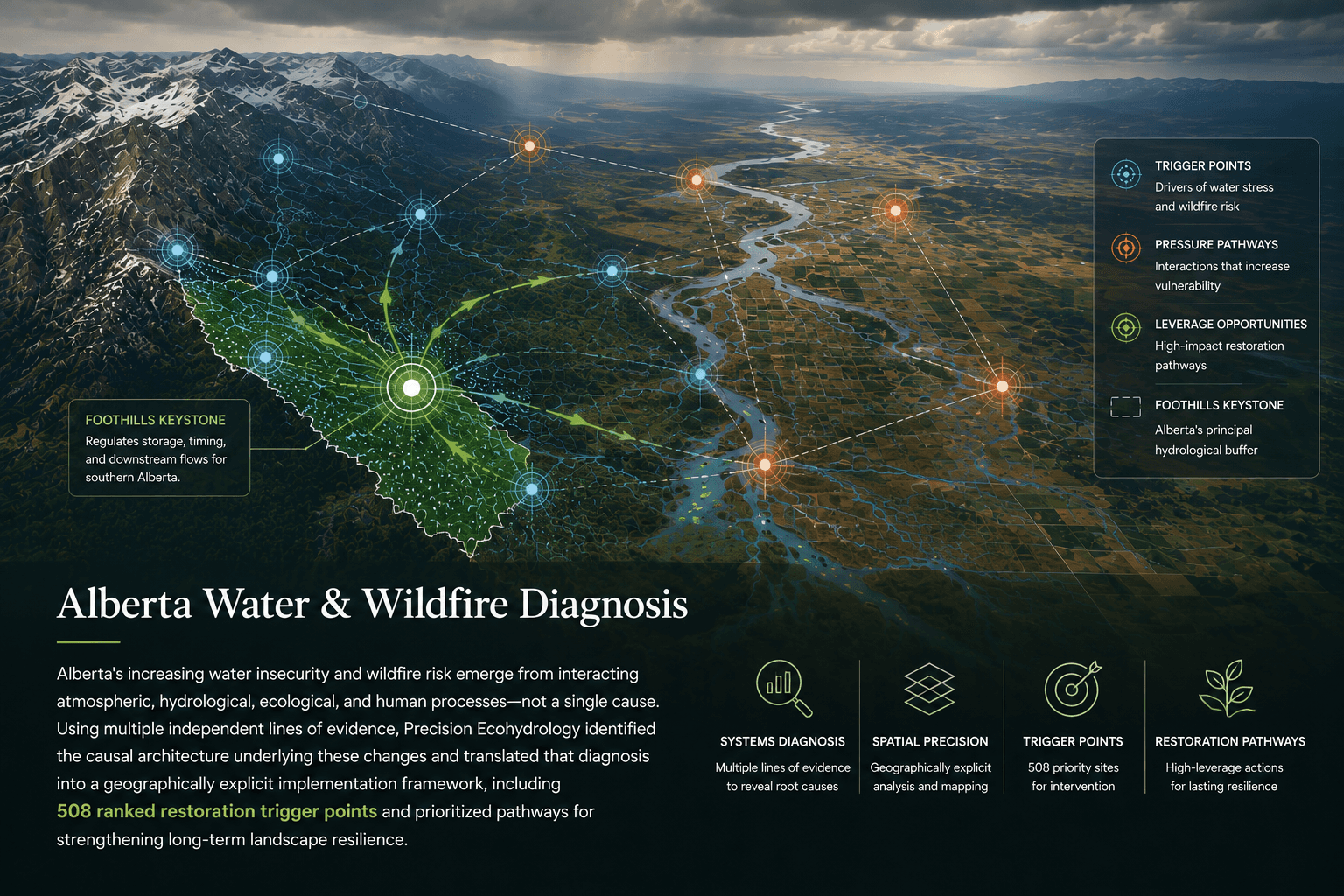
Alberta Executive Summary
A systems-based diagnosis of the environmental processes shaping wildfire risk across Alberta. By identifying where resilience has broken down and where targeted interventions can have the greatest impact, the report provides a scientific foundation for strategic, landscape-scale restoration.
View Executive Summary

Milfoil Executive Summary
A systems-based assessment of Eurasian watermilfoil that moves beyond symptom management to identify the environmental processes driving invasion. The report outlines evidence-based intervention strategies that support healthier aquatic ecosystems and more effective long-term management.
View Executive Summary

Discuss a project

LEARN
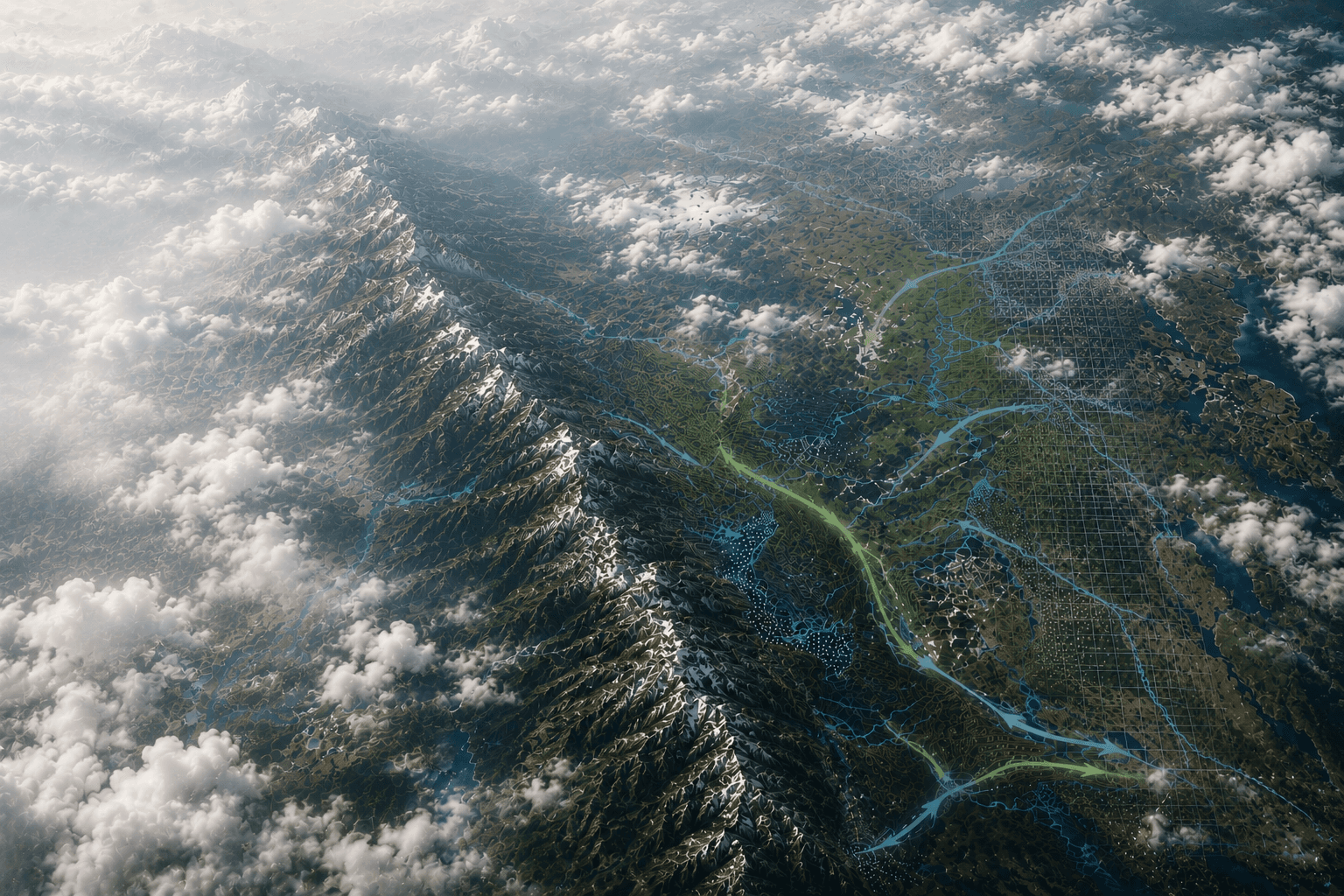
Repairing the causal chains behind environmental decline.
A forthcoming course on causal chain repair—how to understand what is driving change and where meaningful repair can begin.
COMING SOON
The course explains how causal-chain repair works, develops a common language, places it in the context of today’s environmental and economic challenges, builds leadership capacity, and offers hope.

The first step isn’t deciding what to restore—it’s understanding how the system works, where resilience has been lost, and which interventions can create the greatest long-term impact.
If you’re working to improve the resilience of a landscape, watershed, community, or environmental system, we’d welcome the opportunity to start the conversation.
Contact Precision Ecohydrology →